

What Is Champion Bloodline Betta Fish? (And Why It Matters)

"Champion Bloodline" isn't a marketing phrase — it's a traceable genetic record. It means the fish in your tank descends directly from a parent or grandparent that won, or placed in the top ranks of, a recognized Betta competition. That distinction changes everything about what you can expect from the fish over its lifetime.
After 30 years of breeding and competing at shows across Thailand and Southeast Asia, I've seen collectors make expensive mistakes buying "premium" fish with no bloodline history. This guide explains what champion bloodline actually means, how it's established, and what it means for you as a buyer.
Champion bloodline Betta · Direct from our farm in Thailand
- How Betta Fish Competitions Work
- Competition Categories: Tail Types & Colors
- The 3 Standards Every Judge Uses
- What "Champion Bloodline" Actually Means
- 3 Reasons It Matters to Buyers
- How Our Farm Maintains Bloodline Quality
- How to Identify Champion Bloodline When Buying Online
- Frequently Asked Questions
How Betta Fish Competitions Work
Betta fish competitions are held regularly in Thailand, Malaysia, Singapore, the USA, and across Europe. They serve one purpose: to identify the best expression of each Betta variety according to strict, defined standards.
Each competition is divided into classes. A fish doesn't compete against all other Bettas — it competes against fish of the same tail type and color category. Winners within each class then advance to best-in-show rounds, where the top title is typically Grand Champion.
The moment a fish wins or places in these rounds, its genetics become valuable. Breeders — including us — document that fish's lineage and use it as the foundation for the next generation. That documented lineage is what the term "champion bloodline" refers to.

A selection of competition awards from our farm · 30+ years of champion results
Competition Categories: Tail Types & Colors
Understanding categories matters because "champion bloodline" is always specific — a Grand Champion Halfmoon doesn't certify anything about a Crowntail. Here are the main divisions:
Fins spread to a perfect 180° arc. Judged on symmetry, edge clarity, and the fullness of the half-moon shape. The most popular competition class globally.
Short-tailed but still 180° spread. The most popular class in Thailand — easier to maintain condition, harder to fake quality. Our farm specializes here.
Extended ray tips that resemble a crown or spikes. Peak competition condition is narrow — typically only 1–2 shows before the form fades.
Two separate tail lobes of equal proportion. The dorsal fin must also stand tall. Symmetry between both lobes is the hardest criterion to achieve.
Judged primarily on body size (2.5"+ body length). The challenge: large fish tend to stop displaying aggressively — the fighter instinct must still be present.
Massive pectoral fins that billow like elephant ears. Must extend to near mid-body length. Handle with extreme care — the fins tear easily during transport.
Within each tail type, fish are further divided by color — Solid (pure single hue, no stray scales), Fancy/Koi (multicolor patterns), and Dragon Scale (metallic armored plating). Each color class has its own judging weight.
The 3 Standards Every Judge Uses
Regardless of tail type or color, every competition judge evaluates a Betta on three non-negotiable standards. Miss any one of them and the fish doesn't place — no matter how striking it looks in a photo.

All three must be present · A deficit in any one eliminates a fish from placing
Form is structural — the fins must spread to the correct geometry for the class (180° for Halfmoon), with no tears, bites, or thin membrane gaps. This is partly genetic and partly the result of careful conditioning in the weeks before competition.
Color requires uniformity at the scale level. For a Solid Red entry, every single scale must be the same shade of red — no orange tint on the gill plate, no pale scale near the tail base. It's extraordinarily difficult, which is why solid-color classes remain the most respected in the judging community.
Flow is the fighter's display. The fish must fully flare — fins extended, body forward, posture aggressive — and hold that display for the entire judging window. This is trainable. Serious breeders condition their fish daily for months: timed flaring sessions, mirror exposure, controlled lighting to simulate competition conditions.
A fish can have perfect Form and Color and still lose if its Flow is passive. This is why champion bloodline matters beyond genetics — the lineage predicts behavior as much as appearance.
What "Champion Bloodline" Actually Means
When a fish wins Grand Champion or places consistently in top rounds, breeders immediately assess it as a breeding candidate. Its genetics — particularly the traits that produced championship Form, Color, and Flow — are considered proven.
The offspring of that fish carry "champion bloodline" because their structural and behavioral genetics trace directly to a verified winner. But the term only holds meaning when the lineage is documented — meaning the breeder can tell you which fish won what competition, in what year, and show you the records.
Undocumented "champion bloodline" claims are meaningless. Any seller can use those words. What separates a legitimate champion bloodline fish is the paper trail — or in modern farms, the breeding records that trace every fish to its parents.
"Here is something most buyers don't know: farms that have worked for years to stabilize a champion bloodline will never sell their female fish. Only males go to buyers. The females — the mothers and grandmothers of the line — stay in the farm permanently. If a seller is offering both males and females from a 'champion line,' question it. A breeder who spent years developing a bloodline protects it."
3 Reasons Champion Bloodline Matters to Buyers
If you're buying a Betta to keep, display, or potentially breed, here's what champion bloodline genetics actually give you:

Genetics screened over 3+ generations · Traceable to competition-winning parents
The most underappreciated benefit is time saved. With an ordinary fish, you wait 4–6 months before the fins develop enough to know if you have something special. With a champion bloodline fry, an experienced eye can assess the batch in the first weeks — body frame, color intensity, and how the fish carries itself in the water all signal quality from early on.
For collectors who eventually want to breed, the future value argument is even stronger. A fish with traceable champion genetics gives you a legitimate starting point for developing your own line. That's why serious breeders actively seek out established bloodlines — building from quality is exponentially faster than starting from unknown stock.
How Our Farm Maintains Bloodline Quality
Our farm has been breeding competition-standard Betta fish for over 30 years. In that time, the approach has never changed: quality before quantity, and bloodline before everything.
We select breeding pairs from fish that have placed in competition — or from direct offspring of champions that have demonstrated the same structural quality. Every pairing is recorded. We cull each spawn multiple times: first for body frame and color intensity in the fry stage, then again at the juvenile stage for fin development and display behavior.
To stabilize a bloodline takes a minimum of three selective breeding rounds. The fish only become predictably consistent — meaning the majority of a spawn will carry the champion traits — after that point. This process takes years. It cannot be rushed without sacrificing the consistency that makes a bloodline worth having.
The fish in our collection represent the result of that process. When we describe a fish as champion bloodline, we mean its lineage is in our records — we know who its parents were, what they won, and what genetic traits they consistently pass on.
How to Identify Champion Bloodline When Buying Online
You can't verify genetics through a photo alone — but there are signals to look for that separate legitimate champion bloodline sellers from those using the phrase as marketing:
- Specific lineage information — A credible seller can name the competition the parent placed in, the year, and the tail/color class. Vague claims like "competition grade genetics" with no specifics are a red flag.
- Consistent quality across available fish — If a farm has genuine champion bloodline stock, the majority of their available fish will show strong structural quality — not just occasional standouts amid weak fish.
- Direct from the breeding farm — Fish that have traveled through a reseller or wholesaler may have their lineage documentation lost or fabricated. Direct-from-farm purchases preserve the paper trail.
- No female fish for sale — Farms with serious champion bloodlines protect their females. A farm selling both sexes from the same "champion line" may not value the bloodline as highly as they claim.
- 30+ years of operation — Building and maintaining champion bloodlines takes decades. A farm with genuine competition history will have records, photos, and trophies to show for it.
Frequently Asked Questions
Does champion bloodline mean the fish will win competitions?
Not automatically. Champion bloodline gives the fish a strong genetic foundation — correct structure, color potential, and behavioral tendencies. But competition success also depends on conditioning, the owner's care, and timing. Think of it as buying a racehorse with proven lineage: the potential is there, but training still matters.
What's the difference between champion bloodline and competition grade?
Champion bloodline refers to genetics — the fish's ancestry traces to a competition winner. Competition grade refers to current condition — the fish's Form, Color, and Flow are at a level that could place in a show right now. The best fish have both. A champion bloodline fish that hasn't been conditioned won't be competition grade yet.
Why are champion bloodline Betta fish more expensive?
The cost reflects years of selective breeding, documentation, and the reduced volume of fish that meet quality standards after multiple culling rounds. A spawn from champion parents might produce 200 fry, but only 20–30 will carry the full expression of champion genetics. You're paying for the selection process, not just the fish.
Can I breed a champion bloodline fish I buy from you?
Yes — that's one of the strongest reasons collectors seek champion bloodline males. Your fish will carry the genetic potential of its lineage. For best results, pair it with a female from quality stock (fin structure and color should be as strong as possible). We can advise on pairing strategies — contact us directly.
Do you ship champion bloodline Betta fish directly to the USA?
Yes. All fish ship directly from our farm in Thailand to your door via air freight express. There are no middlemen, no warehousing, and no re-packaging by third parties. Read our full shipping guide here to understand the 10-step process we use for every order.
All fish in our collection are bred at our farm in Thailand and traceable to competition-winning lineages. If you're ready to own a Betta with a genuine champion pedigree:
View Our Current Collection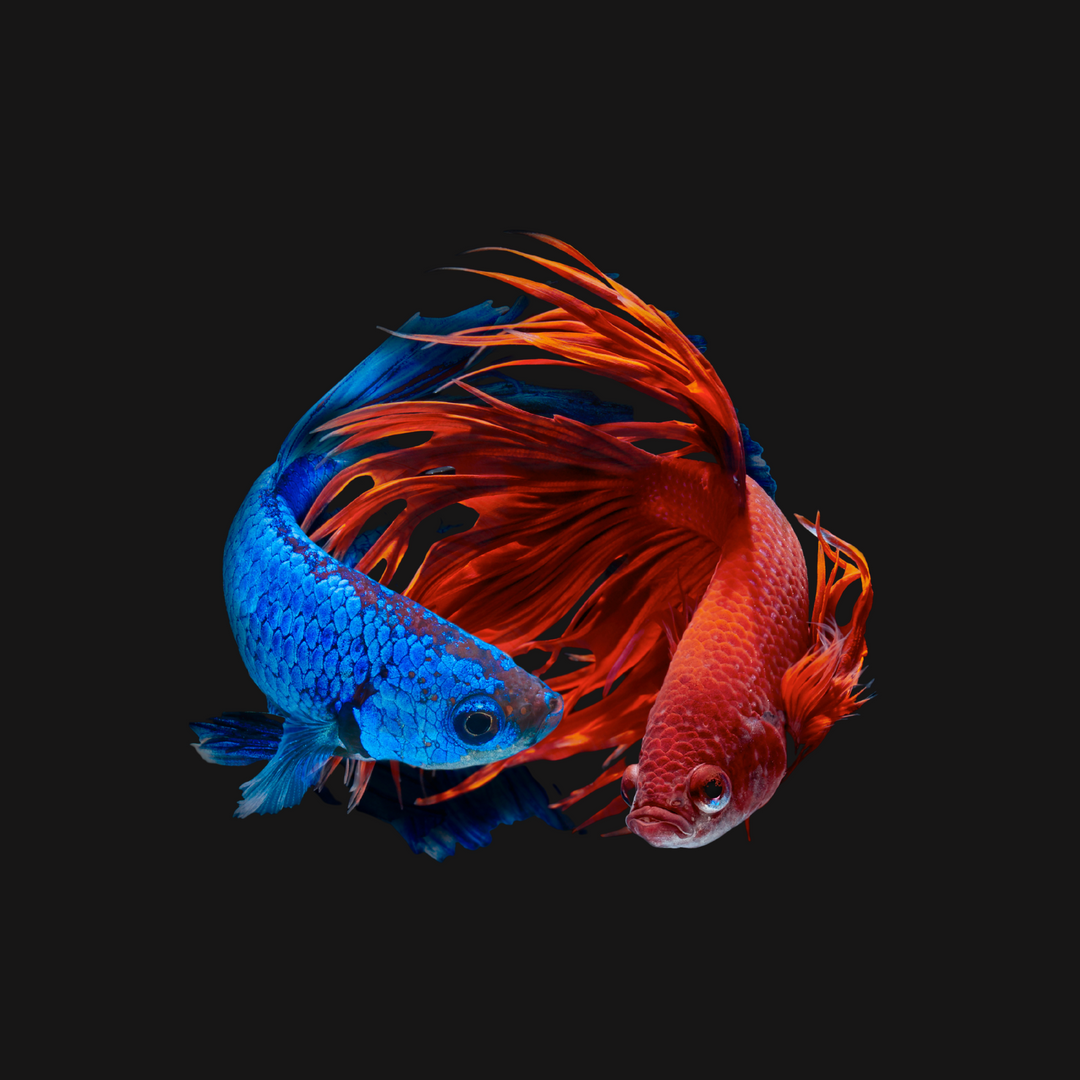


Leave a comment